+91 85278 66560 dr.vineetkaul@yahoo.in
Home / Laryngeal Cancer Treatment in Gurgaon

Laryngeal Cancer Treatment in Gurgaon

Advanced Laryngeal Cancer Treatment in Gurgaon for Early Diagnosis, Voice Preservation, Effective Tumor Removal, Improved Breathing and Swallowing Function, and Comprehensive Care by Expert Head and Neck Cancer Specialists

Best Throat Cancer Surgeon in Gurgaon – Dr. Vineet Kaul

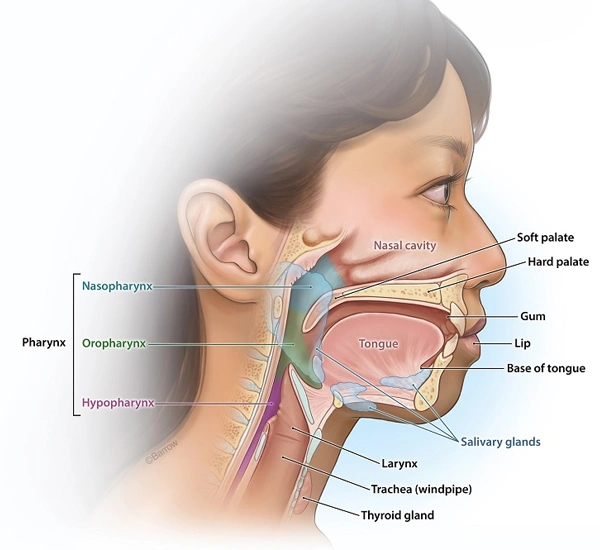
Throat cancer can include cancer of the larynx (voice box) and pharynx (throat). Throat cancer impacts speaking, swallowing, and breathing. Body functions can be preserved, and the chances of survival can be increased through early detection and expert surgical care.

One of the best throat cancer surgeons in Gurgaon, Dr. Vineet Kaul, also specializes in the most advanced throat cancer surgery (laryngopharyngeal surgery) and uses robotic and other minimally invasive surgery techniques to achieve the best results.

Book Your First Consultation

Laryngeal Cancer Treatment Cost in Gurgaon

Laryngeal Cancer Treatment Cost in Gurgaon

The cost of laryngeal cancer treatment in Gurgaon depends on multiple medical and treatment-related factors. The medical professionals assess cancer stage, required surgical or therapy methods and the need for voice-preserving procedures to determine patient needs. The cost may also vary depending on hospital stay duration, ICU care requirements, and additional treatments like radiation or chemotherapy. The total expenses increase with both advanced medical procedures and multiple treatment methods applied together.

  • Stage of cancer
  • Type of surgery or therapy: plastic
  • Need for voice-preserving procedures
  • Hospital stay and ICU care
  • Radiation or chemotherapy

The estimated cost ranges from ₹3,00,000 to ₹9,00,000 based on the complexity of the project.

What is Laryngeal Cancer?

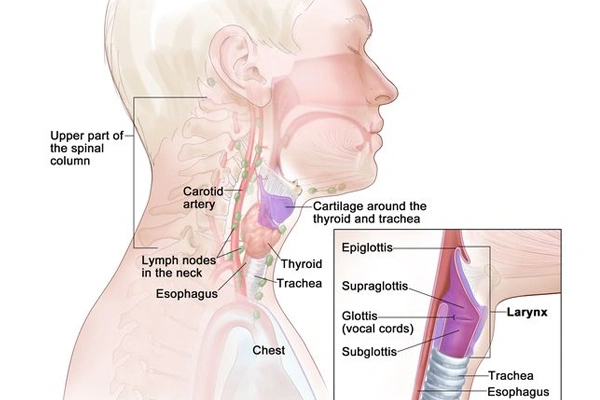
Laryngeal cancer is a type of throat cancer that develops in the larynx, also known as the voice box. The larynx functions as a sound-making organ that safeguards the airway during the process of swallowing. The development of cancer in this region leads to difficulties with speech production, breathing and eating.

Doctors can successfully treat early-stage laryngeal cancer because the disease usually remains contained. Medical professionals need to evaluate patients and provide treatment since delays in these processes will lead to complications that jeopardize both normal voice and airway functions.

What is Laryngeal Cancer
Types of Laryngeal Cancer

Types of Laryngeal Cancer

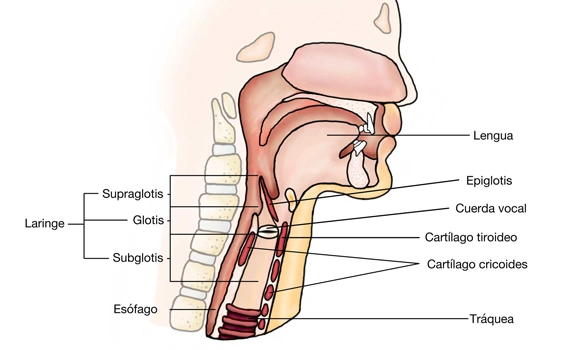
  • Supraglottic Cancer – Upper part of larynx: The disease affects all body parts that exist above the vocal cords and it causes problems with swallowing and airway defense mechanisms.
  • Glottic Cancer – The disease affects the vocal cords which serve as its most common site: The disease directly impacts voice production because its patients typically develop voice alterations at early stages.
  • Subglottic Cancer – Lower part of larynx: The disease manifests beneath the vocal cords which extend through the vocal system and it obstructs breathing and airway function.

All cancer types require distinct evaluations because their location, symptoms and treatment methods differ from each other.

Symptoms of Laryngeal Cancer

  • Change in voice tone: Lasting change in voice qualities or tone
  • Dysphagia: Pain or discomfort while swallowing
  • Chronic sore throat: Throat irritation unrelieved by medications over time
  • Neck mass: Swelling due to Lymph node involvement
  • Ear pain: Referred pain without ear infection
  • Breathing difficulty: Seen at a more advanced stage with a compromised airway.
  • Weight Loss: Unexplained loss of weight with a quick onset

Any voice change persisting for more than two weeks must be evaluated by a specialist.

Symptoms of Laryngeal Cancer
Causes & Risk Factors of Laryngeal Cancer

Causes & Risk Factors of Laryngeal Cancer

Here are some things that can increase the risk of laryngeal cancer.

  • Smoking - Long-time smokers are more likely to develop laryngeal cancer
  • Drinking Alcohol - Increases risk, especially when combined with smoking
  • HPV Infection - Certain viral infections are linked to the development of some cancers
  • Exposure to Harmful Chemicals - Long-term exposure to the pollutants may lead to the development of laryngeal cancer
  • Poor Nutrition- weakens the body's defense system and increases the possibility of getting laryngeal cancer
  • Chronic irritation - Long-term throat inflammation or irritation

The more of the risk factors that are present, the more likely it is that laryngeal cancer will develop.

Laryngeal Cancer Diagnosis

A good diagnosis means:

  • Laryngoscopy: Helps look at the larynx, the voice box, with a scope.
  • Biopsy: To confirm cancer, the tissue sample is checked for cancer cells.
  • CT Scan / MRI: To evaluate tumors. Imaging shows the size and spread of the tumor.
  • PET Scan: To detect the spread of cancer. This scan shows if cancer has spread to other organs.
  • Voice assessment tests: To evaluate the impact of cancer and what it did to the speech and voice.

All these diagnostic methods confirm whether it’s cancer and how to order the treatment.

Laryngeal Cancer Diagnosis
Laryngeal Cancer Staging (TNM System)

Laryngeal Cancer Staging (TNM System)

  • T: tests how big the tumor is and how big its involvement is with the vocal cords and surrounding structures.
  • N: looks at how nearby lymph nodes are involved with the cancer.
  • M: looks at how the cancer has spread to remote/odd organs.

Staging allows us to see how bad it is and adjust treatment plans accordingly. If it is a lower stage, it is easier to preserve the voice and the success rate is higher. When we need to do multiple treatments, it is usually in the higher stages. We need to do accurate staging when we are trying to make a personalized plan that is effective in lowering the cancer and making the everyday functioning of the patient better.

Treatment Options for Laryngeal Cancer

  • Surgery: Removal of the tumor, with the possibility of keeping the patient's voice.
  • Laser surgery: Used to remove small tumors that are at the early stages of cancer for more accuracy.
  • Robotic surgery (TORS): considered for a few less invasive cases.
  • Radiation therapy: usually used for the first stages as the main treatment.
  • Chemotherapy: used for the more advanced stages or for combined treatment approaches.
  • Organ Preservation therapy: used to avoid a total laryngectomy by combining radiation and chemotherapy.

The stage and place of the cancer, along with the general state of the patient, are considered for the point of the treatment options.

Treatment Options for Laryngeal Cancer
Voice Preservation in Laryngeal Cancer Treatment

Voice Preservation in Laryngeal Cancer Treatment

One big goal of laryngeal cancer treatment is to remove the cancer while keeping the patients ability to speak. Physicians have found new techniques in how to remove the cancerous tumors in the larynx and allow the patient to keep their voice box.

Dr. Vineet Kaul operates on people to:

  • Preserve their voice.
  • Use minimally invasive techniques.
  • Use advanced reconstruction if necessary.

All of these approaches help ensure speech, swallowing, and breathing functions remain intact, which enhances quality of life following treatment and decreases complications in the long run.

Recovery Timeline for Laryngeal Cancer

  • Pre-Treatment: Stage, condition, and evaluation determine treatment plan
  • Treatment Phase: Stage, condition, and evaluation determine treatment plan
  • Early Recovery: Voice and symptom management during the healing phase
  • Rehabilitation: Restoration of speech and swallowing function
  • Long-Term Follow-Up: Recovery and recurrence management monitoring

Due to the stage of cancer, treatment type, and the patient’s health, recovery can take time. However, proper follow-up will improve long-term outcomes.

Recovery Timeline for Laryngeal Cancer
Outcomes & Survival in Laryngeal Cancer

Outcomes & Survival in Laryngeal Cancer

  • Early-stage: High cure rates with better chances of voice preservation
  • Advanced-stage: Requires combined therapy such as surgery, radiation, and chemotherapy
  • Timely treatment: Early diagnosis improves survival rates and treatment success
  • Functional outcomes: Early treatment helps maintain voice, swallowing, and breathing functions
  • Overall prognosis: Depends on stage, response to treatment, and patient health
  • Proper treatment planning and early detection play a key role in improving both survival and quality of life.

Why Choose Dr. Vineet Kaul for Laryngeal Cancer Treatment in Gurgaon?

  • Expert in voice box cancer surgery with extensive clinical experience
  • Advanced robotic and laser techniques for precise tumor removal
  • Focus on preserving voice and swallowing function
  • High success rate with safe and effective treatment outcomes
  • Personalized treatment planning based on patient condition
  • Trusted head & neck cancer specialist in Gurgaon

His approach ensures effective cancer treatment while maintaining essential functions and improving patient recovery.

Book Your First Consultation

FAQs – Laryngeal Cancer Treatment

It is cancer of the voice box affecting speech, breathing, and swallowing.

Yes, especially when detected early and treated properly.

Not always; many treatments focus on preserving voice function.

Persistent hoarseness, throat discomfort, and difficulty swallowing.

It ranges from ₹3 lakh to ₹9 lakh depending on stage and treatment.