+91 85278 66560 dr.vineetkaul@yahoo.in
Home / Oral Cancer Surgery in Gurgaon

Oral Cancer Surgery in Gurgaon

The expert surgical care team provides complete oral cancer surgery at their Gurgaon facility, which treats early-stage tumors through extensive reconstruction procedures that enhance patient survival and speech and swallowing abilities, together with their physical appearance.

Best Oral Cancer Surgeon in Gurgaon – Dr. Vineet Kaul

One of the most common forms of cancer in India is oral cancer and among the most affected are the users of tobacco and alcohol. With cancer of the mouth, it is important to detect and remove the tumor as quickly as possible to improve treatment outcomes.

One of the most proficient oral cancer surgeons in Gurgaon is Dr. Vineet Kaul. He performs intricate surgeries on oral cancer patients, including microvascular reconstruction and complex tumor removals, and works to restore the patients’ ability to speak and to appear normal.

Book Your First Consultation

Oral Cancer Surgery Cost in Gurgaon

Oral Cancer Surgery Cost in Gurgaon

Oral cancer surgery costs in Gurgaon vary based on:

  • Size and stage of the tumor
  • Type of surgery
  • Reconstruction needs
  • Duration of hospital and ICU stay
  • Post-surgery therapy (radiation/chemo)

The price of oral cancer surgeries in Gurgaon is between ₹2,50,000 and ₹8,00,000+, depending on how complicated the case is. We provide cost estimates after case evaluations.

What is Oral Cancer?

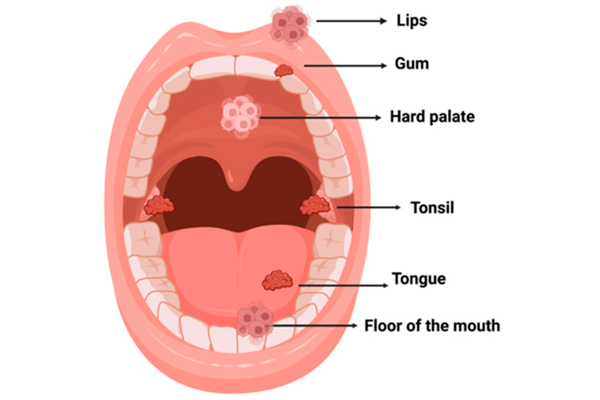
Oral cancer is cancer that can begin in the tongue, gums, cheeks, lips, palate, and the bottom of the mouth, as well as the whole mouth. It starts as an ulcer, or a sore that is pain-free and also does not heal.

Oral cancer is very, very aggressive and, if left untreated, will spread to the lymph nodes and all other body systems. The earlier this cancer is detected, the better your chances are of surviving, and the chances are also better of avoiding extremely aggressive treatment.

What is Oral Cancer
Types of Oral Cancer

Types of Oral Cancer

  • Tongue Cancer - One of the most common oral cancers that damages the ability to speak and swallow.
  • Buccal Mucosa Cancer - Cancer of the inside of the cheeks, which is frequently seen amongst tobacco users.
  • Gum Cancer - This affects your upper and lower gums.
  • Lip Cancer - This is connected to sun exposure and the use of tobacco.
  • Floor of Mouth Cancer - This affects the area that is beneath the tongue.
  • Palate Cancer - This is cancer of the upper part of the mouth.
  • Jaw (Mandibular) Cancer - This involves the bone and is of a level that necessitates reconstruction.

Symptoms of Oral Cancer

  • Mouth ulcers that don't heal
  • Patches (red or white) located in the mouth
  • Chewing or swallowing is difficult
  • Pain in the mouth that doesn't go away
  • Bleeding in the mouth
  • An enlarged or swollen region in the neck or jaw
  • Teeth that have become loose
  • Talking is difficult

👉 If symptoms last longer than two weeks, seek immediate medical attention.

Symptoms of Oral Cancer
Causes & Risk Factors of Oral Cancer

Causes & Risk Factors of Oral Cancer

Here are some oral cancer risks:

  • Tobacco chewing (gutka, pan, khaini)
  • Smoking
  • Alcohol consumption
  • HPV infection
  • Poor oral hygiene
  • Chronic irritation (sharp teeth)
  • Sun exposure (lip cancer)
  • Genetic factors

None of these things is good, and don’t do any of these, and you will help yourself to lessen the risk of oral cancer.

Oral Cancer Diagnosis

To create an effective treatment plan, an accurate diagnosis is needed. This involves:

  • Clinical Examination – Initial assessment of lesion
  • Biopsy – Confirms the diagnosis of cancer
  • CT scans / MRIs – Determine the size and spread of tumors
  • PET Scans – Detects if there are metastases
  • Blood tests – Measures general well-being

Early and accurate staging leads to better treatment outcomes.

Oral Cancer Diagnosis
Oral Cancer Staging (TNM System)

Oral Cancer Staging (TNM System)

The stages of oral cancer help define the severity of the disease.

  • T (Tumor) – Refers to the size and extent of the primary tumor.
  • N (Nodes) – Refers to the spread of the disease to the adjacent lymph nodes.
  • M (Metastasis) – Refers to the spread of the disease to other remote organs.

The stages of oral cancer range from Stage 1 to Stage 4. There is a dramatic increase in survival rates with early-stage cancers.

Treatment Options for Oral Cancer

Treatment depends on the stage of the tumor, its location and the condition of the patient:

  • Surgery
    Surgery is the primary cancer treatment and it includes the complete removal of the tumor along with some healthy tissue that surrounds the tumor.
  • Robotic Surgery
    This is a less invasive option for some tumors that allows for a quicker recovery time.
  • Neck Dissection
    In neck dissections, the lymph nodes are removed to prevent the cancer from spreading.
  • Radiation Therapy
    This treatment is offered to patients after surgery or to patients with more advanced stages of cancer.
  • Chemotherapy
    Chemotherapy can be used together with radiation for patients with more advanced stages of the disease.
  • Targeted and Immunotherapy
    These are advanced treatment options and are available for select patients.
Treatment Options for Oral Cancer
Microvascular Reconstruction (Advanced Cancer Care)

Microvascular Reconstruction (Advanced Cancer Care)

Surgery on tumors often means reconstruction is needed afterward.

Dr. Vineet Kaul is an expert in microvascular free flap reconstruction. This type of surgery helps:

  • Restore speech and the ability to swallow
  • Reconstruct the jaw and facial structures
  • Improve the overall cosmetic look
  • Improve the quality of life

This is a game-changer in the treatment of complicated oral cancer.

Oral Cancer Recovery Timeline

  • Before Surgery (1 - 2 weeks)
    Review, planning and nutrition support
  • Operation and Hospital stay (5 - 10 days)
    Removal and monitoring
  • Initial Recovery (2 - 4 weeks)
    Recovery, pain control, and dietary modification
  • Rehabilitation (1 - 3 months)
    Speech and swallowing therapy
  • Postponed Recovery
    Continuous monitoring and lifestyle modifications
Oral Cancer Recovery Timeline
Outcomes & Survival in Oral Cancer

Outcomes & Survival in Oral Cancer

Survival rates vary based on the level of the disease at the time of diagnosis:

  • Early disease stage: 70-90% survival rate
  • Later disease stage: Requires combination therapies

Earlier treatment, quality surgery, and maintenance therapy improve results and quality of life greatly and beyond expectations.

Why Choose Dr. Vineet Kaul for Oral Cancer Surgery in Gurgaon?

  • Top Oral & Head & Neck Cancer Surgeon in Gurgaon
  • Specialist in intricate and sophisticated oncological surgery
  • Authority in microvascular reconstructive surgery
  • Pioneering robotic surgery and minimally invasive surgery
  • Outstanding success and patient satisfaction
  • Individualized treatment
  • Emphasis on functional and aesthetic rehabilitation

Book Your First Consultation

FAQs – Oral Cancer Treatment

Dr. Vineet Kaul is a leading specialist known for advanced oral cancer surgery and reconstruction.

Yes, oral cancer is highly curable when detected early and treated properly.

The cost ranges from ₹2.5 lakh to ₹8 lakh, depending on the stage and complexity.

The initial symptoms of this condition include non-healing ulcers, red patches, and pain and difficulty swallowing.

Reconstruction becomes necessary for advanced cases that need to restore both functionality and aesthetic appearance.